
Página
Topic 3.1 - Scrum teams
A cohesive set of responsibilities that can be fulfilled by one or more people. The three Scrum roles are:
- Product Owner
- Scrum Master
- Development Team.
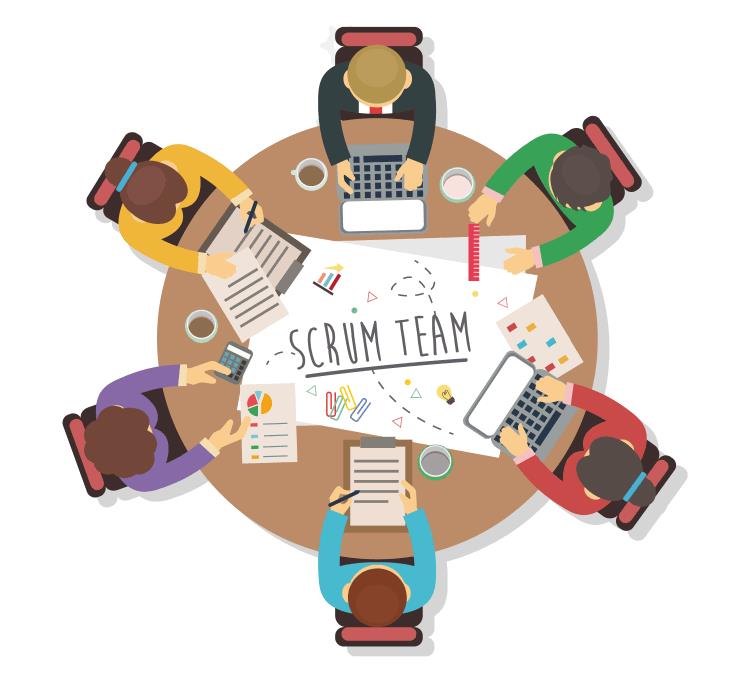
Scrum Team
The fundamental unit of Scrum is a small team of people, a Scrum Team.
The Scrum Team consists of one Scrum Master, one Product Owner, and Developers. Within a Scrum Team, there are no sub-teams or hierarchies.
It is a cohesive unit of professionals focused on one objective at a time, the Product Goal.
Scrum Teams are cross-functional, meaning the members have all the skills necessary to create value each Sprint.
They are also self-managing, meaning they internally decide who does what, when, and how.

Self-organized teams choose the best way to do their work, rather than being led by others outside the team. - Scrum guide 2017.
Self-managed, which means they internally decide who does what, when, and how.
Traditional, self-managing and self- designing/organising teams, self-governing (Hackman, The design of work teams, 1987, p. 334).
Overall, we've found that smaller teams communicate better and are more productive.
● Too large Scrum Teams should consider reorganizing into multiple cohesive Scrum Teams, each focused on the same product
● Multiple Scrum Teams must share the same Product Objective, Product Backlog, and Product Owner
● Collaboration
● Verification
● Maintenance
● Operation
● Experimentation
● Research and development
● Anything else that might be required
Working in Sprints at a sustainable pace improves the Scrum Team’s focus and consistency.
The entire Scrum Team is accountable for creating a valuable, useful Increment every Sprint.
Scrum defines three specific accountabilities within the Scrum Team:
● Developers
● Product Owner
● Scrum Master

Developers
Developers are the people in the Scrum Team that are committed to creating any aspect of a usable Increment each Sprint.
Developer Skills
The specific skills needed by the Developers are often broad and will vary with the domain of work.
Developer Accountability
● Creating a plan for the Sprint, the Sprint Backlog
● Instilling quality by adhering to a Definition of Done
● Adapting their plan each day toward the Sprint Goal
● Holding each other accountable as professionals
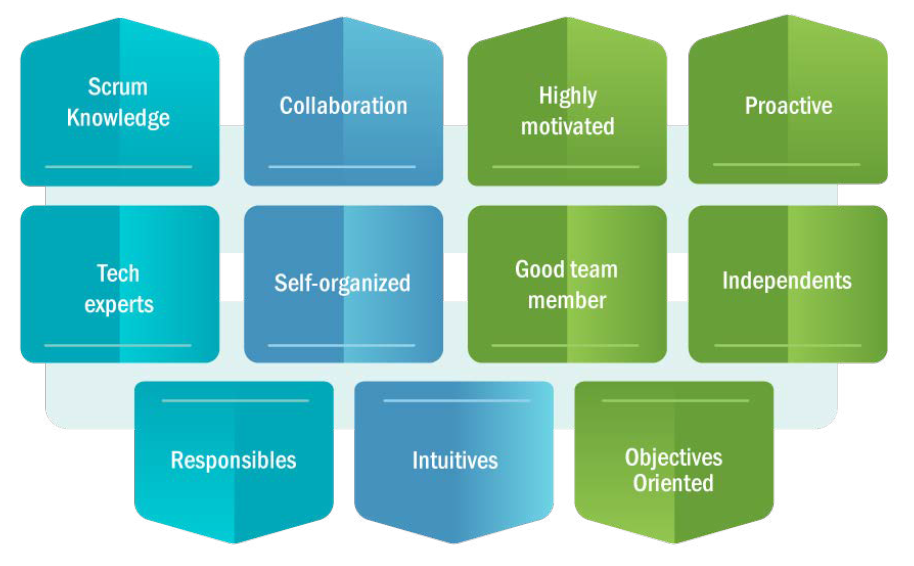
Agile Teams Features
Última modificación: miércoles, 18 de agosto de 2021, 23:04