
Página
Topic 4.6 - Scrum Artifacts
Scrum Artifacts
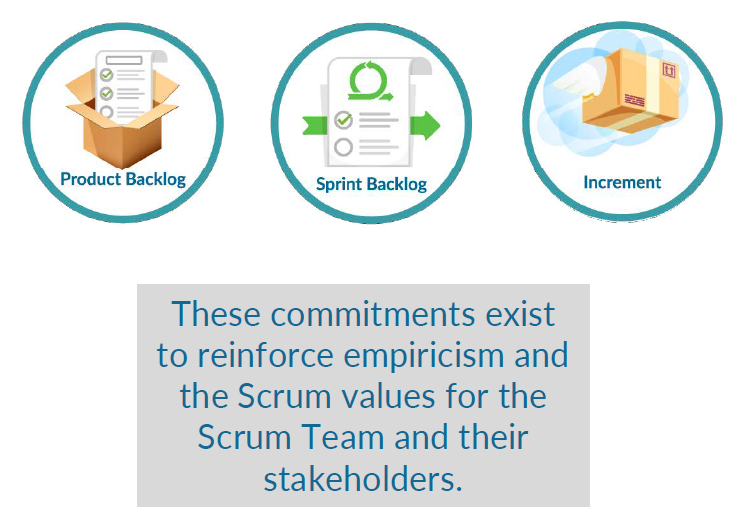
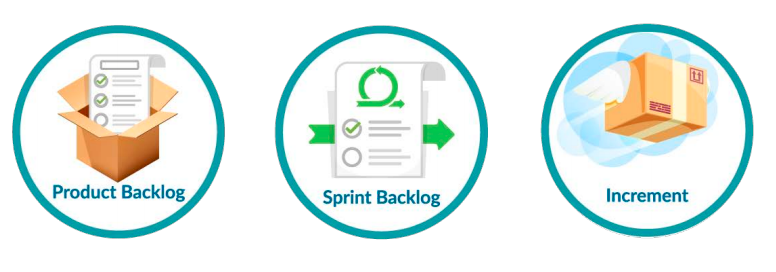
● Scrum’s artifacts represent work or value
● They are designed to maximize transparency of key information
● Thus, everyone inspecting them has the same basis for adaptation

Each artifact contains a commitment to ensure it provides information that enhances transparency and focus against which progress can be measured:
● For the Product Backlog it is the Product Goal
● For the Sprint Backlog it is the Sprint Goal
● For the Increment it is the Definition of Done
Product Backlog
The Product Backlog is an emergent, ordered list of what is needed to improve the product. It is the single source of work undertaken by the Scrum Team.
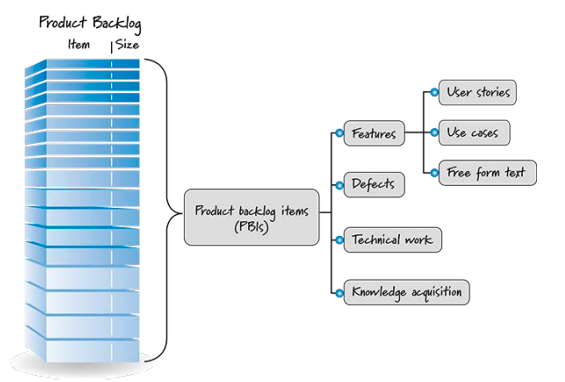
Copyright® 2012, Kenneth S. Rubin and Innolution LLC, All Rights Reserved.
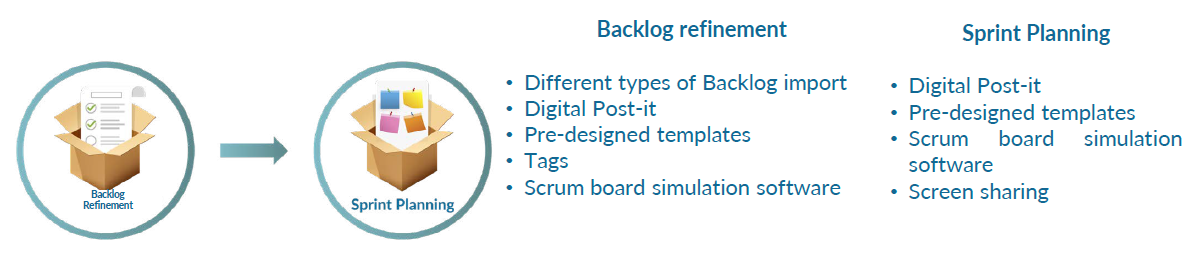
Product Backlog items that can be Done by the Scrum Team within one Sprint are deemed ready for selection in a Sprint Planning event.

The Developers who will be doing the work are responsible for the sizing.
The Product Owner may influence the Developers by helping them understand and select trade-offs. (best alternatives).
Commitment: Product Goal
The Product Goal describes a future state of the product which can serve as a target for the Scrum Team to plan against.
The Product Goal is in the Product Backlog.
The rest of the Product Backlog emerges to define “what” will fulfill the Product Goal.
A product is a vehicle to deliver value. It has a clear boundary, known stakeholders, well-defined users or customers.
A product could be a service, a physical product, or something more abstract.
The Product Goal is the long-term objective for the Scrum Team.
They must fulfill (or abandon) one objective before taking on the next.
Sprint Backlog
The Sprint Backlog is composed of:
1. The Sprint Goal (why)
2. The set of Product Backlog items selected for the Sprint (what)
3. The action plan to deliver the Increment (how)
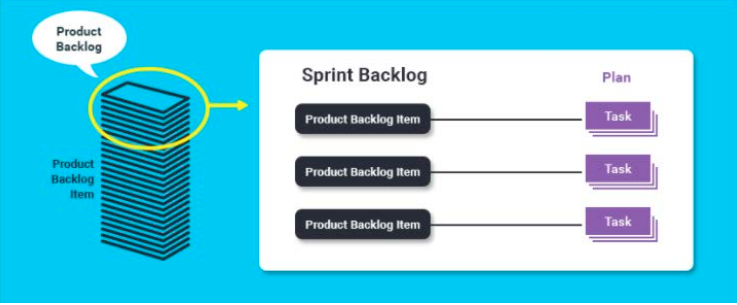
The Sprint Backlog is a plan by and for the Developers.
It is a highly visible, real-time picture of the work that the Developers plan to accomplish during the Sprint in order to achieve the Sprint Goal.
The Sprint Backlog is updated throughout the Sprint as more is learned.
It should have enough detail that they can inspect their progress in the Daily Scrum.
Commitment: Sprint Goal

The Sprint Goal is the single objective for the Sprint.
Although the Sprint Goal is a commitment by the Developers, it provides flexibility in terms of the exact work needed to achieve it.
The Sprint Goal also creates coherence and focus, encouraging the Scrum Team to work together rather than on separate initiatives.
The Sprint Goal is created during the Sprint Planning event and then added to the Sprint Backlog.
As the Developers work during the Sprint, they keep the Sprint Goal in mind.
If the work turns out to be different than they expected, they collaborate with the Product Owner to negotiate the scope of the Sprint Backlog within the Sprint without affecting the Sprint Goal.
Increment
● An Increment is a concrete stepping stone toward the Product Goal
● Each Increment is additive to all prior Increments and thoroughly verified, ensuring that all Increments work together
● In order to provide value, the Increment must be usable
● Multiple Increments may be created within a Sprint
● The sum of the Increments is presented at the Sprint Review thus supporting empiricism
● However, an Increment may be delivered to stakeholders prior to the end of the Sprint
● The Sprint Review should never be considered a gate to releasing value
● Work cannot be considered part of an Increment unless it meets the Definition of Done

Commitment: Definition of Done
● The Definition of Done is a formal description of the state of the Increment when it meets the quality measures required for the product
● Increment
● An increase was born at the time an item in the Product Backlog complies with the Definition of Done
● The Definition of Done creates transparency by providing everyone a shared understanding of what work was completed as part of the Increment
● If a Product Backlog item does not meet the Definition of Done, it cannot be released or even
presented at the Sprint Review

● Definition of Done for an increment is part of the standards of the organization
● If it is not an organizational standard, the Scrum Team Scrum Team must create a Definition of Done appropriate for the product
● All Scrum Teams must follow the Definition of Done
● The Developers are required to conform to the Definition of Done
● If there are multiple Scrum Teams working together on a product, they must define and mutually comply with the same Definition of Done

Agile Practices
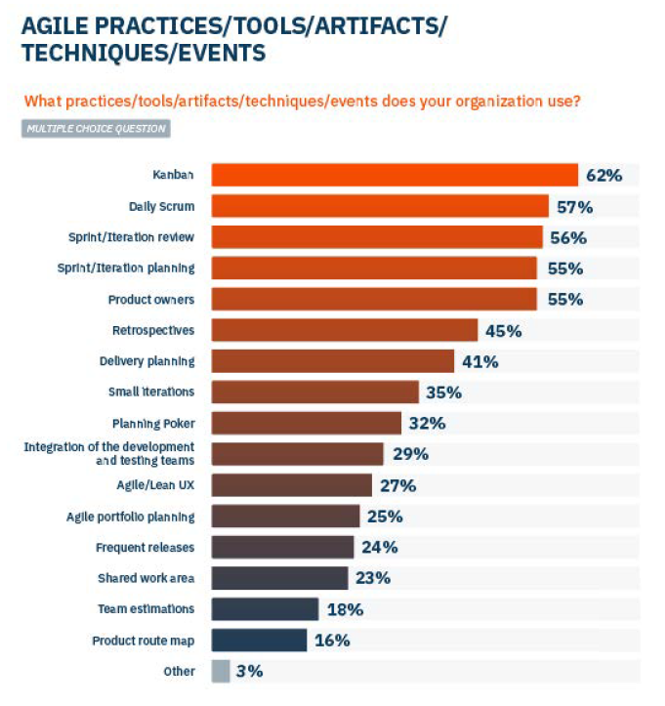
Source: Agile Adoption Report 2020
https://agileadoptionreport.com/
Última modificación: viernes, 20 de agosto de 2021, 07:57