
Página
Topic 1.3 - Advantages and history
Developed by Toyota in the 1940’s
After understanding the just-in-time supply chain management methods of the grocery store industry, Toyota decided to adapt its production methods using the Kanban system it designed.

Designed to Match Inventory to Demand, Not Supply
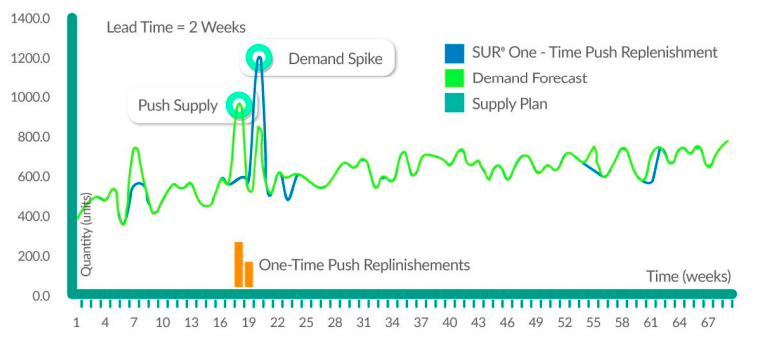
Rather than ordering parts and holding them on inventory, Toyota designed a system to match its ordering to its sales.
Relies on Improved Communication

Kanban depends on different operational and production areas being aware of the state of affairs across the organization.
Generates Less Quality Failure
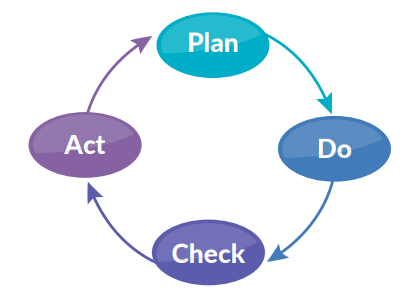
Using a cycle of Planning, Doing, Checking, and Acting, a Kanban process is one of continuous improvement.
Increases Production

By reducing the backlog of production items in the queue which may not be in market demand, anyway, and by reducing the number of failures (also called Kanban), the system increases overall production efficiency.

History
- Developed by Taichi Ohno at Toyota in 1940’s.
- Inspired by storage techniques used by supermarkets.
- Demand controlled system where replenishment happened based on market conditions.
- Based on a pull based system rather than a push based one.
- Use of visual signals was essential to the system.
1962 to 2001
“The two pillars of the Toyota production system are just-in-time and automation with a human touch, or autonomation. The tool used to operate the system is Kanban”. - Taiichi Ohno, Toyota.
Toyota’s Six Rules
Toyota have formulated six rules for the application of Kanban:
-
Later process picks up the number of items indicated by the Kanban at the earlier process.
-
Earlier process produces items in the quantity and sequence indicated by the Kanban.
-
No items are made or transported without a Kanban.
-
Always attach a Kanban to the goods.
-
Defective products are not sent on to the subsequent process. The result is 100 % defect-free goods.
-
Reducing the number of Kanban increases the sensitivity.
Kanban
Kanban (看板) (literally signboard or billboard in Japanese) is a scheduling system for Lean Manufacturing and Just-in-Time Manufacturing.
Kanban is an inventory-control system to control the supply chain. Taiichi Ohno, an industrial engineer at Toyota, developed Kanban to improve manufacturing efficiency. Kanban is one method to achieve JIT.
Kanban systems combined with unique scheduling tools, dramatically reduces inventory levels, increases turns, enhances supplier/customer relationships and improves the accuracy of manufacturing schedulesKanban aligns inventory levels with actual consumption; a signal is sent to produce and deliver a new shipment when material is consumed.
These signals are tracked through the replenishment cycle and bring extraordinary visibility to suppliers and buyers.

The Core Practices of Kanban
- Visualize the Workflow.
- Limit your Work in Progress (WIP).
- Manage the Flow.
- Implement Feedback Loops.
- Make Process Policies Explicit.
- Improve Collaboratively, Evolve Experimentally (using models/scientific method)
Última modificación: jueves, 7 de abril de 2022, 16:58