
Página
Topic 6.3 - Kanban Method
Kanban Method

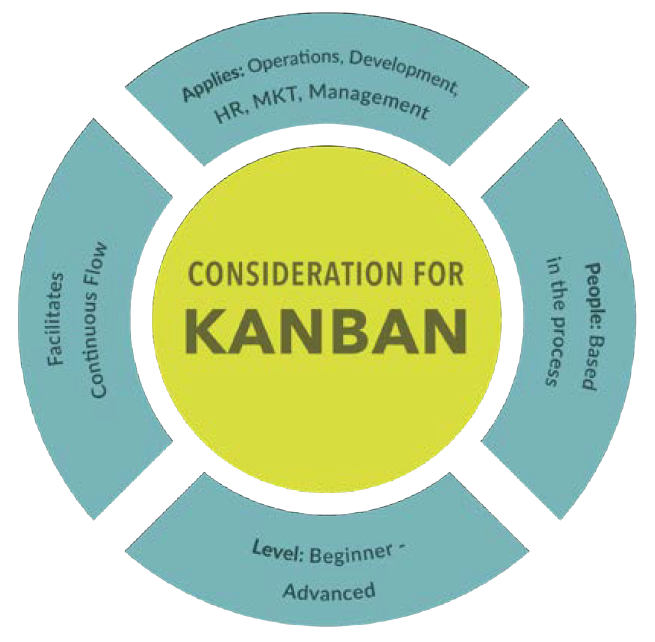
Benefits
- Easy implementation and adaptation.
- Productivity increase by up to 30 %.
- Greater flexibility and adaptation to changes.
- Transparency and continuous workflow.
- Instability in the amount of work.
- Monitoring and compliance of activities.
- Little disruptive and orderly.
- Scalation in multiple teams.
Introduction to Kanban

- Born from the Toyota Production Model.
- Kanban means “card you can see”.
- Involves the use of visual aid to follow up on production.
- This process was observed in the 50s in the grocery stores (JIT).
- The use of visual aid is effective and has become a common practice.
- A Kanban board helps the team increase its effectiveness.
- Adopted as an “Agile practice” in the early 2000s.
Kanban Application

It is better used when the team needs the following conditions:
- Flexibility.
- Focus on continuous delivery.
- Increase in productivity and quality.
- Greater efficiency.
- Focus on team members.
- Variability in the workload.
- Waste reduction.
- Respect current processes.
Wrong Reasons

- It seems easier, simpler, friendlier.
- You don’t need to change anything… Like Scrum.
- Scrum implementation failed.
- Where do I need to defragment the problems?
Basic Properties

- Visualize the workflow.
- Limit work in process.
- Manage the flow.
- Define the process.
- Make the process policies very explicit.
- Implement feedback cycles.
- Improve collaboratively.
Última modificación: miércoles, 6 de abril de 2022, 15:37